For parents navigating their children’s illnesses and injuries, medication can be an overwhelming topic. Nebraska Home Pediatrics & Parents is dedicated to not only providing a high-quality family healthcare experience, but also to providing useful, easy-to-understand education to make illness less overwhelming. So, if you find yourself wondering, “Is acetaminophen safe for kids?” we hope you’ll read on.
Is Acetaminophen Safe for Kids?
Tylenol (acetaminophen) is a pain reliever and fever reducer that is generally considered safe for children, so long as they are given a product and dosage that is appropriate for them according to expert pediatric guidance. Acetaminophen dosage for children is typically based on weight, which means parents must always carefully examine and follow medication labels and their provider’s instructions. This helps prevent overmedicating or administering multiple medicines containing acetaminophen.
Acetaminophen is one of the most commonly recommended medications for children with pain or fever and is the active ingredient in the brand-name product Tylenol. For many mild illnesses and minor injuries, acetaminophen can be a safe option when the correct dosage is followed. Before administering it, it’s important to know your child’s weight, allergies, and any other medications they might be taking. When a fever persists or symptoms worsen, it may be time to call your provider.
What Is Acetaminophen Used for in Children?
Because acetaminophen is generally considered to be safe for children, it is a medication that is commonly recommended by providers for:
- Reducing fever
- Headaches
- Toothaches
- Minor aches and pains
- Discomfort during common illnesses
- Other specific situations when recommended by a healthcare provider
It’s important to remember that, while acetaminophen does relieve pain and reduce fever, it does not reduce inflammation the way NSAIDs, like ibuprofen, do.
At What Age Can Kids Take Acetaminophen?
While many children’s acetaminophen medications list age ranges on their packaging, it is not recommended to choose pediatric dosages based on age alone. At Nebraska Home Pediatrics & Parents, we follow guidelines from the American Academy of Pediatrics, which uses weight as the most important factor in pediatric dosing. For a detailed Tylenol dosage for kids chart, visit our acetaminophen and ibuprofen dosage chart, or closely follow the age and weight restrictions on your medication’s product label.
When taking care of babies and young infants, parents should call their primary care provider for medication recommendations before administering a dose, as fevers in infants can often require an in-person medical evaluation to eliminate concerns of more dangerous conditions.
How Much Acetaminophen Can You Give a Child?
The amount of acetaminophen you can give your child is dependent on your child’s current weight and the concentration of the medication you are administering. Be sure to keep track of when you administer the medication, always use the measuring tool packaged with the medication, and never estimate the amount of a dose or use a household teaspoon to measure.
Use the following chart as a guide when you administer children’s acetaminophen.
| Before Giving Acetaminophen |
What Parents Should Check |
| Child’s weight |
Use an accurate, current weight when following pediatric dosing guidance. |
| Active ingredient |
Make sure the medication contains acetaminophen. |
| Concentration |
Check the Drug Facts label before measuring a dose. |
| Amount |
Follow the product label or pediatrician’s instructions. |
| Last dose |
Record when the previous dose was given. |
| Other medications |
Make sure another medication doesn’t also contain acetaminophen. |
| Measuring device |
Use the syringe or cup supplied with the medication. |
What Happens If a Child Takes Too Much Acetaminophen?
Accidental ingestion of too much acetaminophen can cause life-threatening poisoning and severe liver damage, making proper dosage a critical step in children’s pain and fever management.
Double dosing, incorrect measurement, and even giving doses too close together can happen easily if parents aren’t paying close enough attention. It’s essential to know exactly how much your child weighs in order to compare that weight to the concentration and dosage instructions on your medication’s label.
When administering acetaminophen to your child on a continued basis, we recommend keeping track of every medication dose — what time, what medication, and how much — so that anyone caring for your child will know when to administer more medication, and to avoid combining medications that contain acetaminophen.
If you suspect your child has consumed too much acetaminophen, call Poison Control immediately or go to your local emergency department. Because it takes time for your child’s body to process the medication, symptoms may not appear immediately, and it’s important to get them care as quickly as possible.
Can Kids Take Acetaminophen With Other Medicines?
Yes, as long as the medications do not contain acetaminophen or other active ingredients that react negatively to acetaminophen, kids can take Tylenol with other medications.
Even over-the-counter medications can be dangerous if used improperly, so parents should always check every medication’s active ingredients before administering them alongside acetaminophen. Because many cold, cough, and combination medicines contain acetaminophen, parents need to check medication labels to avoid giving two products together that contain acetaminophen.
Always discuss medications with your primary care provider for specific guidance, and to ensure there are no medication interactions between acetaminophen and your child’s existing medications.
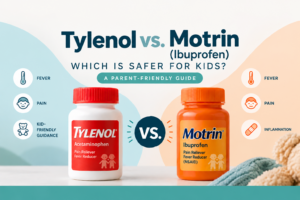
Acetaminophen vs. Ibuprofen: Which Is Safer for Kids?
Both acetaminophen and ibuprofen are considered safe for kids in many circumstances, and the question of “Which is safer?” can only be answered on a case-by-case basis. Factors like the child’s age, weight, health, symptoms, hydration status, and other circumstances will help dictate the answer.
While both medications can reduce pain and fever, they are different medications that work differently in the body. Ibuprofen, for instance, can also reduce inflammation, while acetaminophen does not. If you’re uncertain of which medication to administer, please give your provider a call at Nebraska Home Pediatrics & Parents.
Comparison Table
| Comparison |
Acetaminophen |
Ibuprofen |
| Common brand |
Tylenol |
Motrin / Advil |
| Reduces fever |
Yes |
Yes |
| Relieves pain |
Yes |
Yes |
| Reduces inflammation |
No |
Yes |
| Medication type |
Analgesic / antipyretic |
NSAID |
| Pediatric use |
Depends on age, weight and individual circumstances |
Depends on age, weight and individual circumstances |
When Should You Call Your Pediatrician?
Wondering when it’s time to call your pediatric provider? While we always welcome our patients’ questions, we recommend looking through the following list, just to be sure.
Contact your pediatric primary care provider when:
- You’re unsure about the correct acetaminophen dose
- Your child is a young infant with a fever
- Your child’s fever persists or returns after a fever-free period
- Your child isn’t drinking adequately
- Signs of dehydration are present
- Your child is suffering from persistent vomiting
- Your child is experiencing difficulty breathing
- Your child is displaying unusual sleepiness or difficulty waking
- Your child’s pain becomes severe or worsens
- You’re concerned about how your child looks or behaves
- You suspect too much medication was administered
- You have questions or concerns you need to discuss
If you are concerned about your child and would like to bring them in to see their provider, you can request a same-day appointment at Nebraska Home Pediatrics & Parents.
Acetaminophen Safety Checklist for Parents
- Check your child’s current weight.
- Read the medication label.
- Confirm acetaminophen is the active ingredient.
- Check the medication concentration.
- Measure the correct amount.
- Use the provided dosing syringe or cup.
- Check when the last dose was given.
- Check other medications for acetaminophen.
- Record the dose and time.
- Ask your pediatrician when you’re unsure.
Have Questions About Giving Your Child Medication?
If you’re unsure whether acetaminophen is appropriate for your child, how much to give, or whether your child’s symptoms require medical attention, Nebraska Home Pediatrics & Parents can help. Contact our pediatric team for personalized guidance or schedule an appointment.
Frequently Asked Questions
Is Tylenol safe for kids?
Yes, Tylenol is generally safe for kids when used according to the appropriate age, weight, and dosage guidelines. Always follow the medication label and your pediatrician’s recommendations.
Can babies take acetaminophen?
Acetaminophen may be appropriate for some infants, but parents should consult their pediatrician before giving it to a baby, particularly one younger than 2 years old.
What age can children start taking acetaminophen?
Acetaminophen dosing is primarily based on weight, but age and individual medical circumstances also matter. Consult your pediatrician about when acetaminophen is appropriate for your child.
How often can a child take acetaminophen?
Acetaminophen is commonly given every 4–6 hours when needed, but dosing frequency and maximum daily doses depend on the product and your child’s circumstances. Follow the medication label, consult our acetaminophen/ibuprofen dosage chart, or contact your pediatrician for guidance.
How do I know how much acetaminophen to give my child?
Check the medication packaging for dosing instructions based on your child’s weight, age, and the product’s concentration. If you are unsure about the appropriate dose, contact your pediatrician before administering the medication.
What happens if I accidentally give my child too much Tylenol?
If you accidentally give your child too much Tylenol, contact Poison Control immediately at 1-800-222-1222. An acetaminophen overdose can cause serious liver damage, even if symptoms are not immediately noticeable. Do not wait for symptoms to appear.
Can kids take acetaminophen and ibuprofen?
Both medications may be appropriate for children, depending on their age, weight, and health circumstances. Consult your pediatrician before combining or alternating acetaminophen and ibuprofen to avoid dosing errors.
Should I alternate Tylenol and Motrin?
Alternating Tylenol and Motrin may be appropriate in certain situations, but it is not routinely recommended without medical guidance. Contact your pediatrician for instructions about whether alternating medications is appropriate for your child.
Can acetaminophen be given on an empty stomach?
Yes, acetaminophen can generally be taken with or without food. Follow the product instructions for administration and use an appropriate measuring device for liquid medication.
When should I call my pediatrician about a fever?
Contact your pediatrician if your child is younger than 2 years old and has a fever lasting more than 24 hours, or if your child is 2 years or older and has a fever lasting more than 3 days. You should also seek medical advice if your child shows signs of dehydration, unusual lethargy, or other concerning symptoms. A baby younger than 3 months with a temperature of 100.4°F (38°C) or higher needs immediate medical evaluation. Seek emergency care for difficulty breathing, seizures, or difficulty waking your child.